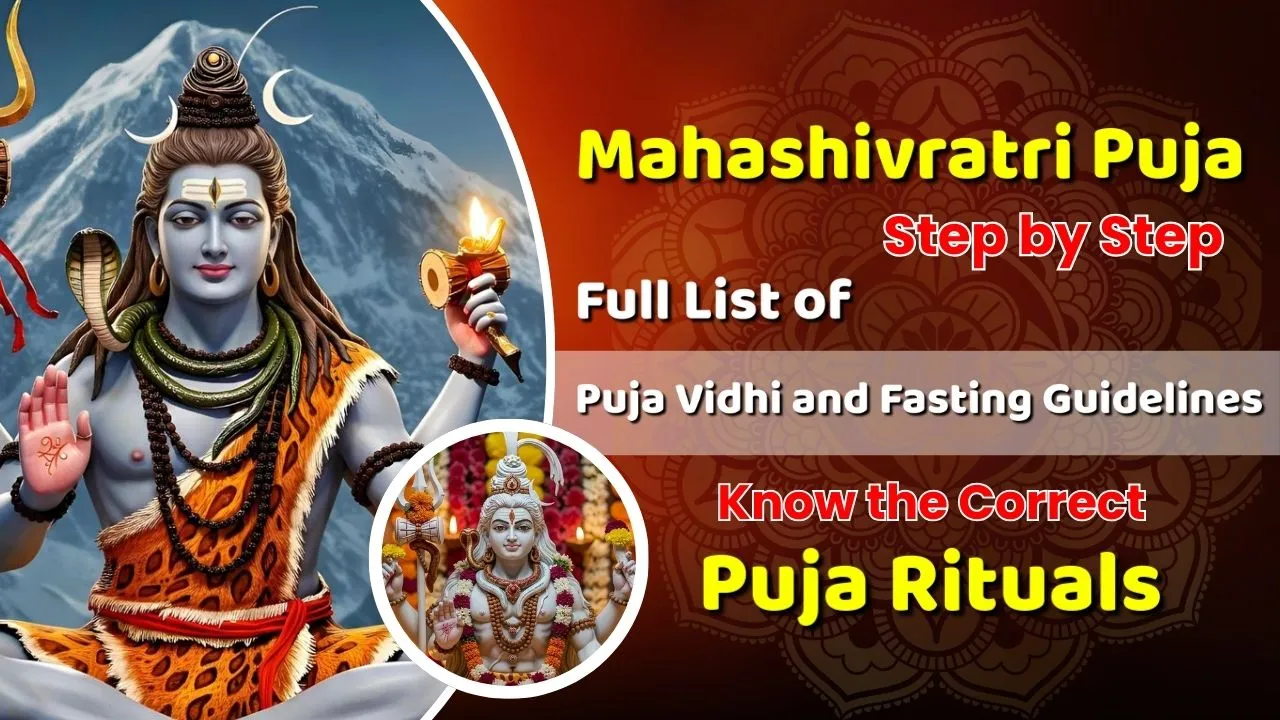
Mahashivratri Pooja Rituals and Fasting Rules: Step-by-Step Guide
Pooja Rituals: Step-by-step guide to Mahashivratri pooja. Fasting Rules: What to eat, what not to eat, and benefits of fasting. Significance and Benefits: Religious importance of Shivratri and health benefits. Both Languages: Main content in Hindi and translation in English. Tips and Precautions: Easy suggestions for beginners. Stories and Mythological Importance: Mythological stories related to Shivratri.
December 13, 2025 Admin 0 min read

Introduction

Mahashivratri is a major Hindu festival celebrated for worshiping Lord Shiva. This night is considered especially auspicious, as it is believed that worshiping Shiva on this night washes away all sins and leads to liberation. In this blog, we will discuss in detail the rituals of Mahashivratri pooja and fasting rules. It includes a step-by-step guide to pooja, fasting rules, benefits, and precautions.

Significance and Mythological Stories

 Mahashivratri holds great significance. According to mythological stories, Lord Shiva performed the Tandav dance on this night, and it was also the night of Shiva and Parvati's marriage. The Shiva Purana states that anyone who stays awake and worships Shiva on this night attains liberation. This festival is celebrated on the Krishna Paksha Chaturdashi of Phalgun month. Spiritually, this night is a time for self-awareness and purification.

Fasting Rules: What to Do and What Not to Do 

 Fasting on Mahashivratri is important. Fasting means abstaining from food and water, but beginners have some concessions. Rules:

  • What to Eat: Fruits, milk, curd, honey, and sattvic food. Eat once in the evening.
  • What Not to Eat: Meat, fish, eggs, onion, garlic, and spicy food. Avoid alcohol and smoking.
  • Water Rules: Drink less water during the day, take a little milk or water in the evening.
  • Benefits: Fasting purifies the body, brings mental peace, and reduces weight.
  • Precautions: Consult a doctor for sick people. Keep light fast for children and elderly.

 Fasting on Mahashivratri is important. Fasting means abstaining from food and water, but beginners have some concessions. Rules:

  1. Bath and Preparation: Bathe in the morning, wear white clothes, and purify the mind.
  2. Clean the Place: Clean the pooja area and install Shivling.
  3. Invocation: Call Lord Shiva with "Om Namah Shivaya" mantra.
  4. Abhishek: Pour milk, water, and Ganges water on Shivling. Offer bel leaves and datura.
  5. Worship: Offer flowers, incense, and prasad. Recite Shiv Chalisa or Rudrashtak.
  6. Aarti: Perform aarti in the evening and distribute prasad.
  7. Conclusion: Stay awake all night and meditate. Break fast in the morning.

Benefits and Health Advantages

 Mahashivratri pooja and fasting offer many benefits. Spiritually, it frees from sins and purifies the soul. Health-wise, fasting improves digestion, purifies blood, and reduces stress. Scientific studies show that staying awake increases melatonin, improving sleep and mood.

Tips and Precautions

  • Beginners start with shorter durations.
  • Do pooja with family for enjoyment.
  • Don't fast if health issues.
  • Avoid crowds when visiting temples and arrive on time.
  • Donate after pooja and feed the poor.

Conclusion

Mahashivratri is the best time to seek Lord Shiva's blessings. Pooja and fasting on this night bring positive changes in life. If doing it for the first time, be patient and follow the rules.

Welcome to the Bhakti family


Leave a Comment

Optional: Upload your profile picture
Image preview